Thursday, January 27, 2022

First-Class Fighting Trim

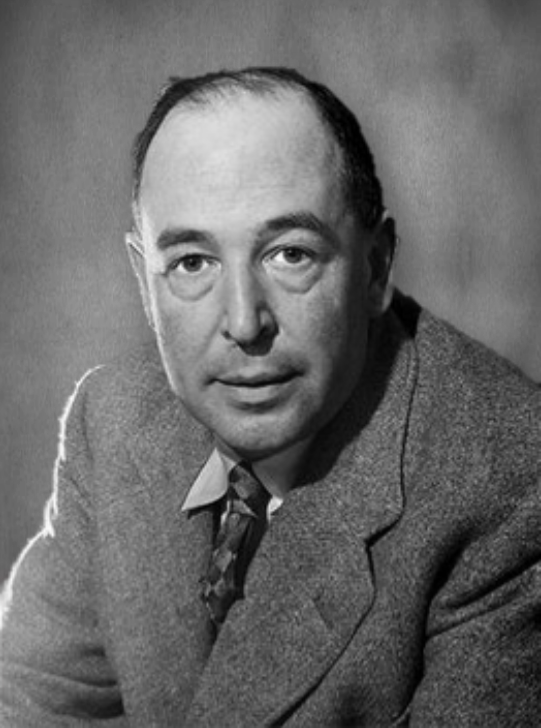
C.S. Lewis

"Prudence means practical common sense, taking the trouble to think out what you
are doing and what is likely to come of it. Nowadays most people hardly think of
Prudence as one of the ‘virtues’. In fact, because Christ said we could only get into
His world by being like children, many Christians have the idea that, provided you
are ‘good’, it does not matter being a fool. But that is a misunderstanding. In the
first place, most children show plenty of ‘prudence’ about doing the things they are
really interested in, and think them out quite sensibly. In the second place, as St.
Paul points out, Christ never meant that we were to remain children in intelligence:
on the contrary. He told us to be not only ‘as harmless as doves’, but also ‘as wise
as serpents’. He wants a child’s heart, but a grown-up’s head. He wants us to be
simple, single-minded, affectionate, and teachable, as good children are; but He also
wants every bit of intelligence we have to be alert at its job, and in first-class fighting
trim. The fact that you are giving money to a charity does not mean that you need
not try to find out whether that charity is a fraud or not. The fact that what you are
thinking about is God Himself (for example, when you are praying) does not mean
that you can be content with the same babyish ideas which you had when you were
a five-year-old. It is, of course, quite true that God will not love you any the less, or
have less use for you, if you happen to have been born with a very second-rate brain.
He has room for people with very little sense, but He wants every one to use what
sense they have."

Sunday, January 23, 2022

Deep and Unmet Needs

Spencer W. Kimball

"Jesus saw sin as wrong but also was able to see sin as springing from deep and unmet needs on the part of the sinner. This permitted him to condemn the sin without condemning the individual. We can show forth our love for others even when we are called upon to correct them. We need to be able to look deeply enough into the lives of others to see the basic causes for their failures and shortcomings."

Tuesday, January 18, 2022

Ships, Like Men, Respond to Challenge

James A. Michener

"A ship, like a human being, moves best when it is slightly athwart the wind, when it has to keep its sails tight and attend its course. Ships, like men, do poorly when the wind is directly behind, pushing them sloppily on their way so that no care is required in steering or in the management of sails; the wind seems favorable, for it blows in the direction one is heading, but actually it is destructive because it induces a relaxation in tension and skill. What is needed is a wind slightly opposed to the ship, for then tension can be maintained, and juices can flow and ideas can germinate, for ships, like men, respond to challenge”

- James A. Michener

Tuesday, January 11, 2022

Turn Their Lives Over to God

President Ezra Taft Benson

"Men and women who turn their lives over to God will discover that He can make a lot more out of their lives than they can. He will deepen their joys, expand their vision, quicken their minds, strengthen their muscles, lift their spirits, multiply their blessings, increase their opportunities, comfort their souls, raise up friends, and pour out peace. Whoever will lose his life in the service of God will find eternal life." 

- President Ezra Taft Benson

Wednesday, January 5, 2022

Quiet Down, Cobwebs

Song for a Fifth Child

Mother, oh mother, come shake out your cloth!
Empty the dustpan, poison the moth,
Hang out the washing and butter the bread,
Sew on a button and make up a bed.
Where is the mother whose house is so shocking?
She's up in the nursery, blissfully rocking!

Oh, I've grown as shiftless as Little Boy Blue
(Lullaby, rockaby, lullaby, loo).
Dishes are waiting and bills are past due
(Pat-a-cake, darling, and peek, peekaboo).
The shopping's not done and there's nothing for stew
And out in the yard there's a hullabaloo
But I'm playing Kanga and this is my Roo.
Look! Aren't her eyes the most wonderful hue?
(Lullaby, rockaby, lullaby loo.)

Oh, cleaning and scrubbing will wait till tomorrow,
But children grow up, as I've learned to my sorrow.
So quiet down, cobwebs. Dust, go to sleep.

I'm rocking my baby. Babies don't keep.

- by Ruth Hulburt Hamilton

Saturday, January 1, 2022

He Is Building a Palace

C.S. Lewis

"Imagine yourself as a living house. God comes in to rebuild that house. At first, perhaps, you can understand what He is doing. He is getting the drains right and stopping the leaks in the roof and so on; you knew that those jobs needed doing and so you are not surprised. But presently He starts knocking the house about in a way that hurts abominably and does not seem to make any sense. What on earth is He up to? The explanation is that He is building quite a different house from the one you thought of - throwing out a new wing here, putting on an extra floor there, running up towers, making courtyards. You thought you were being made into a decent little cottage: but He is building a palace. He intends to come and live in it Himself." 

- C.S. Lewis, Mere Christianity

The Distance Narrows

Spencer W. Kimball

“I find that when I get casual in my relationships with divinity and when it seems that no divine ear is listening and no divine voice is speaking, that I am far, far away. If I immerse myself in the scriptures the distance narrows and the spirituality returns. I find myself loving more intensely those whom I must love with all my heart and mind and strength, and loving them more, I find it easier to abide their counsel.”

Abraham Lincoln's Favorite Poem

Mortality

By William Knox

Oh! why should the spirit of mortal be proud?
Like a swift-fleeting meteor, a fast-flying cloud
A flash of the lightning, a break of the wave
He passeth from life to his rest in the grave.

The leaves of the oak and the willow shall fade,
Be scattered around, and together be laid;
And the young and the old, and the low and the high,
Shall moulder to dust, and together shall lie.

The infant a mother attended and loved;
The mother that infant's affection who proved;
The husband, that mother and infant who blest,--
Each, all, are away to their dwellings of rest.

The maid on whose cheek, on whose brow, in whose eye,
Shone beauty and pleasure, -- her triumphs are by;
And the memory of those who loved her and praised,
Are alike from the minds of the living erased.

The hand of the king that the sceptre hath borne,
The brow of the priest that the mitre hath worn,
The eye of the sage, and the heart of the brave,
Are hidden and lost in the depths of the grave.

The peasant, whose lot was to sow and to reap,
The herdsman, who climbed with his goats up the steep,
The beggar, who wandered in search of his bread,
Have faded away like the grass that we tread.

The saint, who enjoyed the communion of Heaven,
The sinner, who dared to remain unforgiven,
The wise and the foolish, the guilty and just,
Have quietly mingled their bones in the dust.

So the multitude goes -- like the flower or the weed
That withers away to let others succeed;
So the multitude comes -- even those we behold,
To repeat every tale that has often been told.

For we are the same our fathers have been;
We see the same sights our fathers have seen;
We drink the same stream, we view the same sun,
And run the same course our fathers have run.

The thoughts we are thinking, our fathers would think;
From the death we are shrinking, our fathers would shrink;
To the life we are clinging, they also would cling; --
But it speeds from us all like a bird on the wing.

They loved -- but the story we cannot unfold;
They scorned -- but the heart of the haughty is cold;
They grieved -- but no wail from their slumber will come;
They joyed -- but the tongue of their gladness is dumb.

They died -- ay, they died; -- we things that are now,
That walk on the turf that lies over their brow,
And make in their dwellings a transient abode;
Meet the things that they met on their pilgrimage road.

Yea! hope and despondency, pleasure and pain,
Are mingled together in sunshine and rain;
And the smile and the tear, the song and the dirge,
Still follow each other, like surge upon surge.

'Tis the wink of an eye -- 'tis the draught of a breath--
From the blossom of health to the paleness of death,
From the gilded saloon to the bier and the shroud:--
Oh! why should the spirit of mortal be proud?

Related Link

Thursday, August 26, 2021

How to Live in Eternity


Brigham Young

"What is the nature and beauty of Joseph's mission? You know that I am one of his Apostles. When I first heard him preach, he brought heaven and earth together; and all the priests of the day could not tell me anything correct about heaven, hell, God, angels, or devils: they were as blind as Egyptian darkness. When I saw Joseph Smith, he took heaven, figuratively speaking, and brought it down to earth; and he took the earth, brought it up, and opened up, in plainness and simplicity, the things of God; and that is the beauty of his mission. I had a testimony, long before that, that he was a Prophet of the Lord, and that was consoling. Did not Joseph do the same to your understandings? Would he not take the Scriptures and make them so plain and simple that everybody could understand? Every person says, "Yes, it is admirable; it unites the heavens and the earth together;" and as for time, it is nothing, only to learn us how to live in eternity."

- Brigham Young, Journal of Discourses

Monday, July 12, 2021

An Interview with the Savior Himself


President David O. McKay


In 1965, President David O. McKay made the following statement to a group of Church employees: 

Let me assure you, Brethren, that some day you will have a personal priesthood interview with the Savior himself. If you are interested, I will tell you the order in which he will ask you to account for your earthly responsibilities.

First, he will request an accountability report about your relationship with your wife. Have you actively been engaged in making her happy and ensuring that her needs have been met as an individual?

Second, he will want an accountability report about each of your children individually. He will not attempt to have this for simply a family stewardship but will request information about your relationship to each and every child.

Third, he will want to know what you personally have done with the talents you were given in the preexistence.

Fourth, he will want a summary of your activity in your Church assignments. He will not be necessarily interested in what assignments you have had, for in his eyes the home teacher and a mission president are probably equals, but he will request a summary of how you have been of service to your fellow man in your Church assignments.

Fifth, he will have no interest in how you earned your living but if you were honest in all your dealings.

Sixth, he will ask for an accountability on what you have done to contribute in a positive manner to your community, state, country, and the world.

Thursday, April 15, 2021

Far Too Easily Pleased

C.S. Lewis

“It would seem that Our Lord finds our desires not too strong, but too weak. We are half-hearted creatures, fooling about with drink and sex and ambition when infinite joy is offered us, like an ignorant child who wants to go on making mud pies in a slum because he cannot imagine what is meant by the offer of a holiday at the sea. We are far too easily pleased.”

Friday, April 9, 2021

We Find Them But Once in a While

WORTH WHILE

It is easy enough to be pleasant,
When life flows by like a song,
But the man worth while is one who will smile,
When everything goes dead wrong.
For the test of the heart is trouble,
And it always comes with the years,
And the smile that is worth the praises of earth,
Is the smile that shines through tears.

It is easy enough to be prudent,
When nothing tempts you to stray,
When without or within no voice of sin
Is luring your soul away;
But it's only a negative virtue
Until it is tried by fire,
And the life that is worth the honor on earth,
Is the one that resists desire.

By the cynic, the sad, the fallen,
Who had no strength for the strife,
The world's highway is cumbered to-day,
They make up the sum of life.
But the virtue that conquers passion,
And the sorrow that hides in a smile,
It is these that are worth the homage on earth
For we find them but once in a while.

Sunday, April 4, 2021

Get Up and Win that Race


“Quit!” “Give up, you’re beaten,” they shout and plead
there’s just too much against you now, this time you can’t succeed.
And as I start to hang my head in front of failure’s face,
my downward fall is broken by the memory of a race.

And hope refills my weakened will as I recall that scene,
for just the thought of that short race rejuvenates my being.
A children’s race, young boys, young men; how I remember well,
excitement sure, but also fear, it wasn’t hard to tell.

They all lined up so full of hope, each thought to win that race
or tie for first, or if not that, at least take second place.
Their fathers watched from off the side, each cheering for his son,
and each boy hoped to show his dad that he would be the one.

The whistle blew and off they went, young hearts and hopes of fire,
to win, to be the hero there, was each young boy’s desire.
One boy in particular, his dad was in the crowd,
was running near the lead and thought “My dad will be so proud.”

But as he speeded down the field across a shallow dip,
the little boy who thought to win, lost his step and slipped.
Trying hard to catch himself, his hands, flew out to brace,
and mid the laughter of the crowd he fell flat on his face.

So, down he fell and with him hope, he couldn’t win it now.
Embarrassed, sad, he only wished to disappear somehow.
But as he fell his dad stood up and showed his anxious face,
which to the boy so clearly said, “Get up and win that race!”

He quickly rose, no damage done, behind a bit that’s all,
and ran with all his mind and might to make up for his fall.
So anxious to restore himself, to catch up and to win,
his mind went faster than his legs, he slipped and fell again.

He wished that he had quit before with one disgrace.
“I’m hopeless as a runner now, I shouldn’t try to race.”
But, in the laughing crowd he searched and found his father’s face,
that steady look that said again, “Get up and win that race!”

So he jumped up to try again, ten yards behind the last,
if I’m going to gain those yards, he thought, I’ve got to run real fast.
Exceeding everything he had, he regained eight or ten,
but trying so hard to catch the lead, he slipped and fell again.

Defeat! He lay there silently, a tear dropped from his eye,
there’s no sense running anymore—three strikes I’m out—why try'
The will to rise had disappeared, all hope had fled away,
so far behind, so error prone, closer all the way.

“I’ve lost, so what’s the use,” he thought, “I’ll live with my disgrace.”
But then he thought about his dad, who soon he’d have to face.
“Get up,” an echo sounded low. “Get up and take your place.
You were not meant for failure here, get up and win that race.”

With borrowed will, “Get up,” it said, “you haven’t lost at all,
for winning is not more than this; to rise each time you fall.”
So, up he rose to run once more, and with a new commit,
he resolved that win or lose, at least he wouldn’t quit.

So far behind the others now, the most he’d ever been,
still he gave it all he had and ran as though to win.
Three times he’d fallen stumbling, three times he rose again.
Too far behind to hope to win, he still ran to the end.

They cheered the winning runner as he crossed, first place;
head high and proud and happy—no falling, no disgrace.
but, when the fallen youngster crossed the line, last place,
the crowd gave him the greater cheer for finishing the race.

And even though he came in last with head bowed low, unproud,
you would have thought he’d won the race, to listen to the crowd.
And to his dad he sadly said, “I didn’t do so well.”
To me, you won,” his father said. “You rose each time you fell.”

And now when things seem dark and hard and difficult to face,
the memory of that little boy helps me in my own race.
For all of life is like that race, with ups and downs and all.
And all you have to do to win is rise each time you fall.

“Quit!” “Give up, you’re beaten,” they still shout in my face,
but another voice within me says, “Get up and win that race.”

Saturday, April 3, 2021

Show Him the Better Way


"The Upward Reach"

He stood at the crossroads all alone,
The sunlight in his face.
He had no thought for the world unknown—
He was set for a manly race.
But the roads stretched east, and the roads stretched west,
And the lad knew not which road was best;
So he chose the road that led him down,
And he lost the race and victor’s crown.
He was caught at last in an angry snare
Because no one stood at the crossroads there
To show him the better road.

Another day, at the self-same place,
A boy with high hopes stood.
He, too, was set for a manly race;
He, too, was seeking the things that were good;
But one was there who the roads did know,
And that one showed him which way to go.
So he turned from the road that would lead him down,
And he won the race and the victor’s crown.
He walks today the highway fair
Because one stood at the crossroads there
To show him the better way.

Monday, January 11, 2021

The Oyster

The Oyster

There once was an oyster whose story I'll tell --
Who found that some sand had slipped under his shell.
Just one little grain --but it gave him much pain --
For oysters have feelings --although they're quite plain.


Now did he berate the working of fate --
Which had led him to such a deplorable state?
No! He said to himself, as he lay on the shelf,
"If I can't remove it --I'll try to improve it."


So, the years rolled by as years always do,
And he came to ultimate destiny --stew!
But the small grain of sand which had bothered him so --
Was a beautiful pearl all richly aglow.


Now this tale has a moral for isn't it grand --
What an oyster can do with a morsel of sand?
What couldn't we do -- if we'd only begin
To enrich all those things that get under our skin.

- Anon.

Saturday, May 30, 2020

Audrey Assad

Flowing Forth in Its Own Native Simplicity

The Prophet Joseph Smith
“His [Joseph Smith's] language [abounded] in original eloquence peculiar to himself—not polished—not studied—not smoothed and softened by education and refined by art; but flowing forth in its own native simplicity, and profusely abounding in variety of subject and manner. He interested and edified, while, at the same time, he amused and entertained his audience; and none listened to him that were ever weary with his discourse. I have even known him to retain a congregation of willing and anxious listeners for many hours together, in the midst of cold or sunshine, rain or wind, while they were laughing at one moment and weeping the next. Even his most bitter enemies were generally overcome, if he could once get their ears”

- Autobiography of Parley Parker Pratt, ed. Parley P. Pratt Jr. (1961), 46).

Sunday, May 10, 2020

You Can Sing This Song When I'm Gone


Like many of his songs, James Taylor's "You Can Close Your Eyes" is timeless.

It was beautiful then, and it will always be beautiful.


Well the sun is surely sinking down
But the moon is slowly rising
And this old world must still be spinning 'round
And I still love you

So close your eyes
You can close your eyes, it's all right
I don't know no love songs
And I can't sing the blues anymore
But I can sing this song
And you can sing this song
When I'm gone

Well it won't be long before another day
We're gonna have a good time
And no one's gonna take that time away
You can stay as long as you like

So close your eyes
You can close your eyes, it's all right
I don't know no love songs
And I can't sing the blues anymore
But I can sing this song
And you can sing this song
When I'm gone

So close your eyes
You can close your eyes, it's all right
I don't know no love songs
And I can't sing the blues anymore
But I can sing this song
And you can sing this song
When I'm gone

Wednesday, April 15, 2020

Refuge from the Storm


Since recent events (general conference, coronavirus, earthquakes, erupting volcanos, storms, etc.) have reminded some people that we are living in the prophesied last days, and since there is no shortage of speculation or limits to the human imagination, I recommend Craig James Ostler's book Living in the Last Days: Refuge from the Storm as a good resource for anyone who is interested in better understanding the events that will precede the second coming of the Savior Jesus Christ. This book is light on conjecture, and heavy on doctrine, scripture, and the teachings of ancient and modern prophets. There is still much that we don't know, but it would be wise to acquaint ourselves thoroughly with what has already been revealed, because the coming of the Lord is near, even at the doors (Matt. 24:33): 

"And again, be patient in tribulation until I come; and, behold, I come quickly, and my reward is with me, and they who have sought me early shall find rest to their souls. Even so. Amen." (D&C 54:10)


Thursday, April 9, 2020

Come, Let Us Read


Books are keys to wisdom’s treasure;

Books are gates to lands of pleasure;

Books are paths that upward lead;

Books are friends. Come, let us read.

Monday, April 6, 2020

If Your Lips Would Keep from Slips


If you your lips would keep from slips,
Five things observe with care:
Of whom you speak, to whom you speak,
And how and when and where.

If you your ears would save from jeers,
These things keep meekly hid:
Myself and I, and mine and my,
And how I do and did. 

- Anonymous

Friday, April 3, 2020

Within my Bosom Glows Unearthly Fire

John Milton
Milton’s Prayer of Patience

I am old and blind!
Men point at me as smitten by God’s frown;
Afflicted and deserted of my kind,
Yet am I not cast down.

I am weak, yet strong;
I murmur not that I no longer see;
Poor, old, and helpless, I the more belong,
Father Supreme! to Thee.

All-merciful One!
When men are furthest, then art Thou most near,
When friends pass by, my weaknesses to shun,
Thy chariot I hear.

Thy glorious face
Is leaning toward me, and its holy light
Shines in upon my lonely dwelling-place,—
And there is no more night.

On my bended knee
I recognize Thy purpose clearly shown;
My vision Thou hast dimmed, that I may see
Thyself—Thyself alone.

I have naught to fear:
This darkness is the shadow of Thy wing;
Beneath it I am almost sacred—here
Can come no evil thing.

Oh, I seem to stand
Trembling, where foot of mortal ne’er hath been,
Wrapped in that radiance from the sinless land,
Which eye hath never seen!

Visions come and go:
Shapes of resplendent beauty round me throng;
From angel lips I seem to hear the flow
Of soft and holy song.

It is nothing now,
When heaven is opening on my sightless eyes,
When airs from Paradise refresh my brow,
That earth in darkness lies.

In a purer clime
My being fills with rapture,—waves of thought
Roll in upon my spirit,—strains sublime
Break over me unsought.

Give me now my lyre!
I feel the stirrings of a gift divine:
Within my bosom glows unearthly fire
Lit by no skill of mine.

- Elizabeth (Lloyd) Howell

Thursday, March 26, 2020

Tell Me Where is Fancy Bred?

The Trial Scene, 'The Merchant of Venice', Act IV, Scene 1. Oil on canvas. Robert Smirke © RSC Theatre Collection
A Few Favorite Passages from Shakespeare's The Merchant of Venice

BASSANIO
In Belmont is a lady richly left;
And she is fair, and, fairer than that word,
Of wondrous virtues: sometimes from her eyes
I did receive fair speechless messages:
Her name is Portia, nothing undervalued
To Cato's daughter, Brutus' Portia:
Nor is the wide world ignorant of her worth,
For the four winds blow in from every coast
Renowned suitors, and her sunny locks
Hang on her temples like a golden fleece;
Which makes her seat of Belmont Colchos' strand,
And many Jasons come in quest of her.
O my Antonio, had I but the means
To hold a rival place with one of them,
I have a mind presages me such thrift,
That I should questionless be fortunate!

All that glitters is not gold;
Often have you heard that told:
Many a man his life hath sold
But my outside to behold:
Gilded tombs do worms enfold.
Had you been as wise as bold,
Young in limbs, in judgment old,
Your answer had not been inscroll'd:
Fare you well; your suit is cold.
Cold, indeed; and labour lost:
Then, farewell, heat, and welcome, frost!
Portia, adieu. I have too grieved a heart
To take a tedious leave: thus losers part. 

---

ARRAGON
What is here?
Reads 
The fire seven times tried this:
Seven times tried that judgment is,
That did never choose amiss.
Some there be that shadows kiss;
Such have but a shadow's bliss:
There be fools alive, I wis,
Silver'd o'er; and so was this.
Take what wife you will to bed,
I will ever be your head:
So be gone: you are sped.
Still more fool I shall appear
By the time I linger here
With one fool's head I came to woo,
But I go away with two.
Sweet, adieu. I'll keep my oath,
Patiently to bear my wroth.
---

Music, whilst BASSANIO comments on the caskets to himself

SONG.

Tell me where is fancy bred,
Or in the heart, or in the head?
How begot, how nourished?
Reply, reply.
It is engender'd in the eyes,
With gazing fed; and fancy dies
In the cradle where it lies.
Let us all ring fancy's knell
I'll begin it,--Ding, dong, bell. 

---

BASSANIO
What find I here? 
Opening the leaden casket 
Fair Portia's counterfeit! What demi-god
Hath come so near creation? Move these eyes?
Or whether, riding on the balls of mine,
Seem they in motion? Here are sever'd lips,
Parted with sugar breath: so sweet a bar
Should sunder such sweet friends. Here in her hairs
The painter plays the spider and hath woven
A golden mesh to entrap the hearts of men,
Faster than gnats in cobwebs; but her eyes,--
How could he see to do them? having made one,
Methinks it should have power to steal both his
And leave itself unfurnish'd. Yet look, how far
The substance of my praise doth wrong this shadow
In underprizing it, so far this shadow
Doth limp behind the substance. Here's the scroll,
The continent and summary of my fortune. 
Reads 
You that choose not by the view,
Chance as fair and choose as true!
Since this fortune falls to you,
Be content and seek no new,
If you be well pleased with this
And hold your fortune for your bliss,
Turn you where your lady is
And claim her with a loving kiss.
A gentle scroll. Fair lady, by your leave;
I come by note, to give and to receive.
Like one of two contending in a prize,
That thinks he hath done well in people's eyes,
Hearing applause and universal shout,
Giddy in spirit, still gazing in a doubt
Whether these pearls of praise be his or no;
So, thrice fair lady, stand I, even so;
As doubtful whether what I see be true,
Until confirm'd, sign'd, ratified by you.

PORTIA
The quality of mercy is not strain'd,
It droppeth as the gentle rain from heaven
Upon the place beneath: it is twice blest;
It blesseth him that gives and him that takes:
'Tis mightiest in the mightiest: it becomes
The throned monarch better than his crown;
His sceptre shows the force of temporal power,
The attribute to awe and majesty,
Wherein doth sit the dread and fear of kings;
But mercy is above this sceptred sway;
It is enthroned in the hearts of kings,
It is an attribute to God himself;
And earthly power doth then show likest God's
When mercy seasons justice. Therefore, Jew,
Though justice be thy plea, consider this,
That, in the course of justice, none of us
Should see salvation: we do pray for mercy;
And that same prayer doth teach us all to render
The deeds of mercy. I have spoke thus much
To mitigate the justice of thy plea;
Which if thou follow, this strict court of Venice
Must needs give sentence 'gainst the merchant there.

LORENZO
The moon shines bright: in such a night as this,
When the sweet wind did gently kiss the trees
And they did make no noise, in such a night
Troilus methinks mounted the Troyan walls
And sigh'd his soul toward the Grecian tents,
Where Cressid lay that night.
JESSICA
In such a night
Did Thisbe fearfully o'ertrip the dew
And saw the lion's shadow ere himself
And ran dismay'd away.
LORENZO
In such a night
Stood Dido with a willow in her hand
Upon the wild sea banks and waft her love
To come again to Carthage.
JESSICA
In such a night
Medea gather'd the enchanted herbs
That did renew old AEson.
LORENZO
In such a night
Did Jessica steal from the wealthy Jew
And with an unthrift love did run from Venice
As far as Belmont.
JESSICA
In such a night
Did young Lorenzo swear he loved her well,
Stealing her soul with many vows of faith
And ne'er a true one.
LORENZO
In such a night
Did pretty Jessica, like a little shrew,
Slander her love, and he forgave it her.
JESSICA
I would out-night you, did no body come;
But, hark, I hear the footing of a man.
---

PORTIA
That light we see is burning in my hall.
How far that little candle throws his beams!
So shines a good deed in a naughty world.


Wednesday, March 4, 2020

The Genius of Communication


"The genius of communication is the ability to be both totally honest and totally kind at the same time."

- John Powell, The Secret of Staying in Love, Valencia, California: Tabor Publishing, 1974, p. 131

Sunday, February 16, 2020

Must I Not Rather Obtain for Myself?

The Prophet Joseph Smith
Respected Uncle Silas,

It is with feelings of deep interest for the well fare of mankind which fills my mind on the reflection that all were formed by the hand of him who will call the same to give an impartial account of all their works on that great day to which you and myself in common with them are bound, that I take up my pen and seat myself in an attitude to address a few though imperfect lines to you for your perusal.

I have no doubt but that you will agree with me that men will be held accountable for the things which they have and not for the things they have not or that all the light and intelligence communicated to them from their benifficen [beneficent] creator whether it is much or little by the same they in justice will be judged, and that they are required to yield obedience and improve upon that and that only which is given for man is not to live by bread alone but by every word that proceeds [p. 228] out of the mouth of God
Seeing that the Lord has never given the world to understand by anything heretofore revealed that he had ceased forever to speak to his creatures when saught unto in a proper manner why should it be thought a thing incredible that he should be pleased to speak again in these last days for their salvation Perhaps you may be surprized at this assertion that I should say for the salvation of his creatures in these last days since we have already in our possesion a vast volume of his word which he has previously given 

But you will admit that the word spoken to Noah was not sufficent for Abraham or it was not required of Abraham to leave the land of his nativity and seek an Inheritance in a strange land Country upon the word spoken to Noah but for himself he obtain ed promises at the hand of the Lord and walked in that perfection that he was called the friend of God Isaac the promised seed was not required to rest his hope upon the promises made to his father Abraham but was priviledged with the assurance of his approbation in the sight of Heaven by the direct voice of the Lord to him 

If one man can live upon the revelations given to another might not I with propriety ask why the necessity then of the Lord speaking to Isaac as he did as is record ed in the 26 chapter of Genesis for the Lord there repeats or rather promises again to perform the oath which he had previously sworn unto Abraham and why this repet[it]ion to Isaac Why was not the first promise as sure for Isaac as it was for Abraham. Was not Isaac Abraham's son And could he not place implicit confidence in the word of his father as being a man of God.

Perhaps you may say that he was a very peculiar man and different from men in these last days consequently the Lord favored him with blessings peculiar and different as he was different from men in this age I admit that he was a peculiar man and was not only peculiarly blessed but greatly bless ed. But all the peculiarity that I can discover in the [p. 229] man or all the difference between him and men in this age is that he was more holy and more perfect before God and came to him with a purer heart and more faith than men in this day.

The same might be said on the subject of Jacobs history Why was it that the Lord spake to him concerning the same promise after he had made it once to Abraham and renewed it to Isaac why could not Jacob rest contented upon the word spoken to his fathers When the time of the promise drew nigh for the deliverance of the children of Israel from the land of Egypt why was it necessary that the Lord should begin to speak to them The promise or word to Abraham was that his seed should serve in bondage and be afflicted four hundred years and after that they should come out with great substance Why did they not rely upon this promise and when they had remained in Egypt in bondage four hundred [years] come out without waiting for further revelation but act entirely upon the promise given to Abraham that they should come out.

Paul said to his Hebrew brethren that God b[e]ing more abundantly willing to show unto the heirs of his promises the immutability of his council [“]confirmed it by an oath.” He also exhorts them who throug[h] faith and patience inherit the promises.

[“]Notwithstanding we (said Paul) have fled for refuge to lay hold of the hope set before us which hope we have as an an chor of the soul both sure and steadfast and which entereth into that within the vail.” Yet he was careful to press upon them the necessity of continuing on untill they as well as those who inherited the promises might have the assurance of their salvation confirmed to them by an oath from the mouth of him who cannot could not lie for that seemed to be the example anciently and Paul holds it out to his brethren as an object attainable in his day and why not[?] 

I admit that by reading [p. 230]the scriptures of truth saints in the days of Paul could learn beyond the power of contradiction that Abraham Isaac and Jacob had the promise of eternal life confirmed to them by an oath of the Lord but that promise or oath was no assurance to them of their salvation but they could by walking in the footsteps continuing in the faith of their fathers obtain for themselves an oath for confirmation that they were meet to be partake[r]s of the inheritance with the saints in light.
If the saints in the days of the Apostles were priviledged to take the saints for example and lay hold of the same promises and attain to the same exhalted priviledges of knowing that their names were writen in the Lambs book of life and that they were sealed there as a perpetual memorial before the face of the most high will not the same faithfulness the same purity of heart and the same faith bring the same assurance of eternal life and that in the same manner to the children of men now in this age of the world[?]

I have no doubt but that the holy prophets and apostles and saints in ancient days were saved in the Kingdom of God. Neither do I doubt but that they held converse and communion with them while in the flesh as Paul said to the corinthian brethren that the Lord Jesus showed himself to above 500 saints at one time after his resuretion [resurrection]. Job said that he knew that his Redeemer lived and that he should see him in the flesh in the latter days. I may believe that Enoch walked with God I may believe that Abraham communed with God and conversed with angels. I may believe that Isaac obtained a renewal of the covenant made to Abraham by the direct voice of the Lord. I may believe that Jacob conversed with holy angels and heard the word of his Maker. that he wrestled with the angel until he prevailed and obtained a blessing I may believe that Elijah was taken to Heaven in a chariot of fire with fiery horses I may believe that the [p. 231] saints saw the Lord and conversed with him face to face aft er his resurection I may believe that the Hebrew Church came to Mount Zion and unto the city of the living God the Heavenly Jerusalem and to an inumerable company of angels. I may believe that they looked into Eternity and saw the Judge of all, and Jesus the Mediator of the new covenant; but will all this purchase an assurance for me, or waft me to the regions of Eternal day with my garments spotless, pure, and white? Or, must I not rather obtain for myself, by my own faith and dilligence, in keeping the commandments of the Lord, an assurance of salvation for myself And have I not an equal priviledge with the ancient saints? and will not the Lord hear my prayers, and listen to my cries, as soon [as] he ever did to their’s if I come to him in the manner they did or is he a respecter of persons?

I must now close this subject for the want of time; and I may say with propriety at the begining; we would be pleased to see you in Kirtland and more pleased to have you embrace the New Covenant. I remain.

Yours affectionately

Joseph Smith

JS, Letter, Kirtland, OH, to Silas Smith, Stockholm, NY, 26 Sept. 1833; in Lucy Mack Smith, History, 1845, pp. 228–232; handwriting of Martha Jane Coray; CHL. (see here)

Why the Halfling?


Gandalf Teaches Galadriel an Important Lesson

Galadriel: Mithrandir, why the halfling?

Gandalf: I do not know. Saruman believes that it is only great power that can hold evil in check, but that is not what I've found. I've found it is the small things, everyday deeds of ordinary folk that keeps the darkness at bay; simple acts of kindness and love. Why Bilbo Baggins? Perhaps it is because I am afraid, and he gives me courage.

Galadriel: Do not be afraid, Mithandir. You are not alone. If you should ever need my help, I will come.


Tuesday, February 11, 2020

In His Bright and Fiery Eye


The Man from Snowy River


There was movement at the station, for the word had passed around
That the colt from Old Regret had got away,
And had joined the wild bush horses - he was worth a thousand pound,
So all the cracks had gathered to the fray.
All the tried and noted riders from the stations near and far
Had mustered at the homestead overnight,
For the bushmen love hard riding where the wild bush horses are,
And the stock-horse snuffs the battle with delight.

There was Harrison, who made his pile when Pardon won the cup,
The old man with his hair as white as snow;
But few could ride beside him when his blood was fairly up —
He would go wherever horse and man could go.
And Clancy of the Overflow came down to lend a hand,
No better horseman ever held the reins;
For never horse could throw him while the saddle girths would stand,
He learnt to ride while droving on the plains.

And one was there, a stripling on a small and weedy beast;
He was something like a racehorse undersized,
With a touch of Timor pony — three parts thoroughbred at least —
And such as are by mountain horsemen prized.
He was hard and tough and wiry — just the sort that won't say die —
There was courage in his quick impatient tread;
And he bore the badge of gameness in his bright and fiery eye,
And the proud and lofty carriage of his head.

But still so slight and weedy, one would doubt his power to stay,
And the old man said, "That horse will never do
For a long and tiring gallop - lad, you'd better stop away,
Those hills are far too rough for such as you."
So he waited sad and wistful — only Clancy stood his friend —
"I think we ought to let him come," he said;
"I warrant he'll be with us when he's wanted at the end,
For both his horse and he are mountain bred."

"He hails from Snowy River, up by Kosciusko's side,
Where the hills are twice as steep and twice as rough,
Where a horse's hoofs strike firelight from the flint stones every stride,
The man that holds his own is good enough.
And the Snowy River riders on the mountains make their home,
Where the river runs those giant hills between;
I have seen full many horsemen since I first commenced to roam,
But nowhere yet such horsemen have I seen."

So he went; they found the horses by the big mimosa clump,
They raced away towards the mountain's brow,
And the old man gave his orders, "Boys, go at them from the jump,
No use to try for fancy riding now.
And, Clancy, you must wheel them, try and wheel them to the right.
Ride boldly, lad, and never fear the spills,
For never yet was rider that could keep the mob in sight,
If once they gain the shelter of those hills."

So Clancy rode to wheel them — he was racing on the wing
Where the best and boldest riders take their place,
And he raced his stockhorse past them, and he made the ranges ring
With the stockwhip, as he met them face to face.
Then they halted for a moment, while he swung the dreaded lash,
But they saw their well-loved mountain full in view,
And they charged beneath the stockwhip with a sharp and sudden dash,
And off into the mountain scrub they flew.

Then fast the horsemen followed, where the gorges deep and black
Resounded to the thunder of their tread,
And the stockwhips woke the echoes, and they fiercely answered back
From cliffs and crags that beetled overhead.
And upward, ever upward, the wild horses held their way,
Where Mountain Ash and Kurrajong grew wide;
And the old man muttered fiercely, "We may bid the mob good day,
No man can hold them down the other side."

When they reached the mountain's summit, even Clancy took a pull -
It well might make the boldest hold their breath;
The wild hop scrub grew thickly, and the hidden ground was full
Of wombat holes, and any slip was death.
But the man from Snowy River let the pony have his head,
And he swung his stockwhip round and gave a cheer,
And he raced him down the mountain like a torrent down its bed,
While the others stood and watched in very fear.

He sent the flint-stones flying, but the pony kept his feet,
He cleared the fallen timbers in his stride,
And the man from Snowy River never shifted in his seat —
It was grand to see that mountain horseman ride.
Through the stringy barks and saplings, on the rough and broken ground,
Down the hillside at a racing pace he went;
And he never drew the bridle till he landed safe and sound,
At the bottom of that terrible descent.

He was right among the horses as they climbed the farther hill
And the watchers on the mountain standing mute,
Saw him ply the stockwhip fiercely; he was right among them still,
As he raced across the clearing in pursuit.
Then they lost him for a moment, where two mountain gullies met
In the ranges - but a final glimpse reveals
On a dim and distant hillside the wild horses racing yet,
With the man from Snowy River at their heels.

And he ran them single-handed till their sides were white with foam.
He followed like a bloodhound on their track,
Till they halted cowed and beaten, then he turned their heads for home,
And alone and unassisted brought them back.
But his hardy mountain pony he could scarcely raise a trot,
He was blood from hip to shoulder from the spur;
But his pluck was still undaunted, and his courage fiery hot,
For never yet was mountain horse a cur.

And down by Kosciusko, where the pine-clad ridges raise
Their torn and rugged battlements on high,
Where the air is clear as crystal, and the white stars fairly blaze
At midnight in the cold and frosty sky,
And where around the Overflow the reed -beds sweep and sway
To the breezes, and the rolling plains are wide,
The man from Snowy River is a household word today,
And the stockmen tell the story of his ride.